

Established 2004

Ruddlesden geotechnical

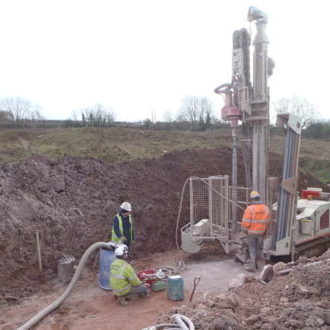
Ruddlesden geotechnical provides ground investigation, geotechnical consultancy and contamination assessment services.

Based in Exeter, but covering the whole of the UK, albeit primarily concentrated in the South West, Ruddlesden geotechnical was formed in 2004.

Ruddlesden geotechnical works on behalf of a wide client base, including local, regional and national housing developers, housing associations, commercial developers, building contractors, structural and civil engineers, architects, building consultants, quantity surveyors, local authorities and private individuals.

Development projects range from single dwellings and extensions to large housing estates, multi-storey flats, offices, industrial units, roads, slopes, schools, hospitals and basements.

The services and projects listed on this web-site provide an indication of those undertaken by Ruddlesden geotechnical, but others are carried out. If your requirement is not readily identifiable on this web-site, please contact us as we may still be able to help you.


  • AGS
  • Constructionline
  • CSCS
  • SMAS
  • ECFC trust
  • Latest news

    25 Mar 2026

    BRE 365 Soakaway Testing

    Simon Ruddlesden was pleased to present at the AGS Annual Conference, to talk about BRE 365 soakaway testing, asking the question, though not necessarily providing the answer: Should we be carrying out BRE 365 soakaway testing in geologies where previous testing has shown soakaway/ infiltration drainage to be unsuitable? The BRE 365 soakaway test is widely accepted and requested as the field test that is to be carried out to assess the suitability of the ground for soakaway/ infiltration drainage. However, the test is not without danger, mainly due to working at height risks, and it is relatively wasteful of resources, including fuel and water. If previous testing results consistently and convincingly show that certain geologies are unsuitable for soakaway/ infiltration drainage, should a relatively unsafe and not particularly sustainable test be carried out? Using data from over 5,000 tests on more than 1,200 sites investigated by Ruddlesden geotechnical over the last 20 years, mainly in the South West, there is a clear and understandable correlation between unsuccessful tests and the underlying geology, where the underlying geology comprises predominantly lower permeability mudstones and clays, notably the Mercia Mudstone Group, Lias Group and Oxford Clay Formation, although there are a number of anomalies, which can usually be explained by a closer inspection of the local geology, including superficial deposits. More data and research will be required if regulators and designers are to accept that no testing is required in certain geologies. The presentation sparked an interesting discussion afterwards, and it is hoped that it will have inspired others to share their data and/ or offer technical support, to ultimately produce a map that provides confidence to regulators and designers that BRE 365 testing is not required in certain geologies. Please contact us directly if you would like to discuss this further.

    BRE 365 Soakaway Testing
    BRE 365 Soakaway Testing
  • Recent projects

    Earthworks Specification, Devon

    Following a materials suitability assessment, Ruddlesden geotechnical produced an earthworks specification for the proposed material movements at a residential development site in Paignton. The specification summarised suitable and unsuitable materials present (based on the findings of the materials suitability assessment) and provided details of how to excavate, stockpile and deposit the materials. Guidance on the testing requirements (to confirm the material was suitable for placement/ conformed to those suitable materials detailed within the specification) was also provided. Ruddlesden geotechnical also carried out the earthworks testing for this project.

    45-earthworks-specification-reduced-1
  • Recent projects

    Iron and Manganese Testing undertaken Instead of Remediation

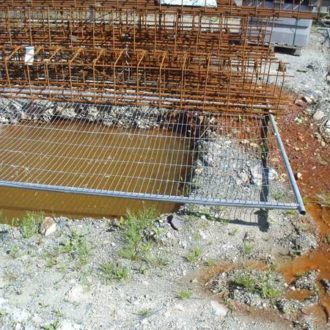
    An effervescent (oily) and rusty sheen was noted on water within initial foundation excavations and concern was raised about possible contamination from a nearby former railway siding. A walkover survey and geological knowledge identified the effervescent and rusty sheen as being of natural origin. Some bacteria (leptothrix discophora) that live in waterlogged places get their energy from iron and manganese, and, as these harmless bacteria grow and decompose, the iron may appear oily or form red or orange films, fluffs and coatings. It was also noted that a mining report stated that mines in the area were mainly mined for manganese, i.e. the underlying geology is rich in manganese. Therefore, no remedial measures were required. This was confirmed by UKAS accredited contamination laboratory testing.

    59-heavy-metal-testing-cornwall-1